

Marketing a Remodeling Company: How to Get Kitchen and Bath Jobs in the US
Homeowners hire remodelers who are nearby, licensed and visibly good at the job: photos of finished projects, a clear estimate and reviews from neighbors. This guide covers Google Business Profile and Local Services Ads, lead marketplaces such as Angi and Thumbtack, license and EPA lead-safe basics, portfolio pages, referral partners and the numbers to track.

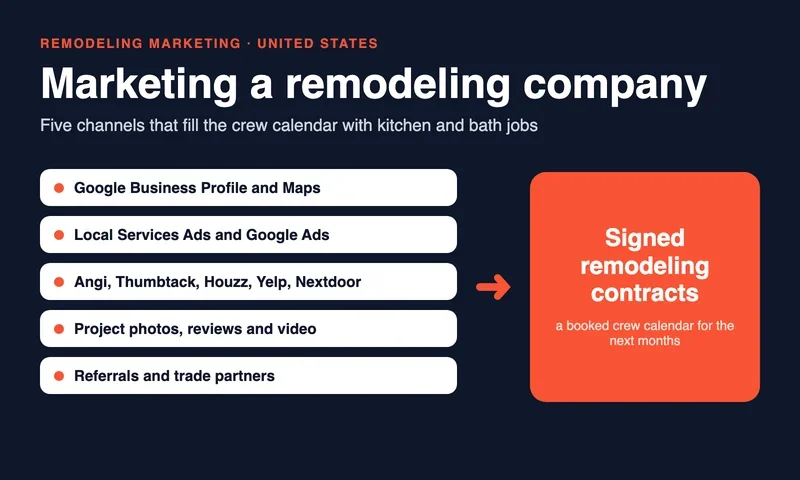
Who hires a remodeler, and how do they choose?
A remodeling customer almost always lives within a short drive of your shop and hires for a specific reason: they just closed on an older house, the kitchen has not changed since the 1990s, a bathroom is leaking, or a family is growing. They compare three or four contractors on the same things: photos of similar jobs, a price they can understand, reviews from neighbors, and who called back first. The decision cycle is short, and the winner is usually the company that is visible at the right moment and looks trustworthy. For that reason a remodeling company needs its own demand calendar: neighborhoods with a lot of recent home sales, housing stock built before 1978 or in a style you specialize in, and the months when your crew has openings.
Price expectations are worth knowing before you write any ad. NerdWallet puts typical bathroom remodels at roughly $6,600 to $18,000, with extensive high-end jobs above $80,000. The 2025 Cost vs. Value figures as reported by Opendoor use a defined scope and come out higher: a midrange bathroom remodel at $26,138 (about 80% recouped at resale) and a minor kitchen remodel at $28,458. Both numbers are secondary reports, so check the current Remodeling magazine report before you quote them in your own materials. The gap between the two ranges is the point: "bathroom remodel" can mean a $7,000 refresh or a $40,000 gut job, and your ad and landing page should say which one you sell.
Segments differ in channels and in the first offer:
| Segment | Where they look for a contractor | What to offer first |
|---|---|---|
| Recent buyers of an older home | Google search and Maps, Local Services Ads, referrals from real estate agents and home inspectors | Free in-home estimate and a written scope; lead-safe practices for pre-1978 houses |
| Owners with a dated kitchen or bath | Google, Houzz, Pinterest and Instagram for ideas, then Maps for a local crew | Design consultation and a price range per square foot |
| One-room or cosmetic refresh | Angi, Thumbtack, Nextdoor, Google Maps | "Starting at" price for a clear scope and a start date |
| Budget bathroom | Thumbtack, Yelp, Nextdoor, Facebook | Tub-to-shower conversion or full bath refresh with a fixed estimate |
| Premium design-build | Interior designers, architects, Houzz, referrals | Designer meeting and a visit to a finished project |
As a rule the budget segment starts with a bathroom, so it usually pays to sell that room first and offer the kitchen or basement after the crew finishes. In the premium segment the logic is reversed: projects well above the average usually come through a designer or architect, so your marketing there is a partner program (see below), not an ad. Commercial work and ground-up houses follow different rules and are outside this article. For the local side of everything below, read our guide to local SEO.
License, portfolio and estimate: what to prepare before you run any ads
An ad brings a person to a page, and within seconds they decide whether to stay or go back to the results. So build the proof first: a website or landing page, a verified Google Business Profile and profiles on the marketplaces you plan to use, all with the same photos, prices and terms. The website is the hub; ads, social links and the QR code on the project manager's card should all point to it.
Start with the legal basics, because in remodeling they double as trust signals. Licensing is set by each state (and sometimes by city or county), so it differs a lot. California is strict about advertising: the Contractors State License Board states that licensed contractors must put their license number in all forms of advertising, including websites and posts that solicit work, with a civil penalty of $100 to $1,000 for a first offense. Its marketplace guidance adds that unlicensed operators may advertise only jobs under $500 and must say they are not licensed, and that a licensed contractor may not advertise work outside the license classification. Other states differ: in Texas, for example, the state licenses certain trades such as air conditioning, refrigeration and heating contractors through TDLR, while rules for general remodeling can come from the city. Look up your own state licensing board and your city building department, and put the license number wherever your state requires it, usually the website footer, estimates, contracts, vehicle lettering and yard signs.
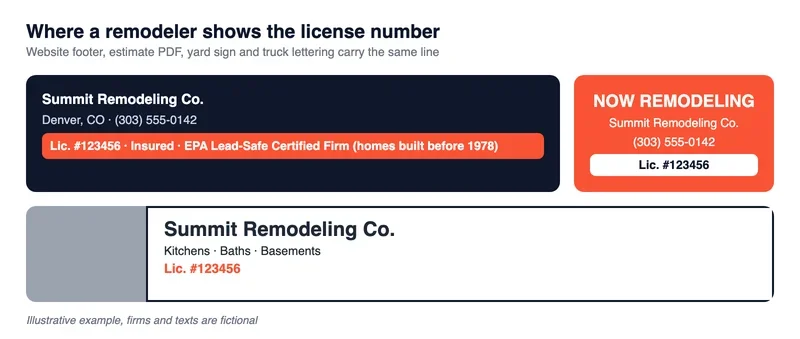
The second basic is lead paint. Under the EPA rule, anyone paid to disturb painted surfaces in homes built before 1978 must be certified in lead-safe work practices, and EPA says about three-quarters of US homes built before 1978 still contain some lead-based paint. Firm certification costs $300 and is good for five years, and approved firms may use the EPA Lead-Safe Certified Firm logo in their marketing under the logo guidelines. The work practices include containing the work area, banning open-flame burning and power tools without HEPA exhaust control, cleaning with verification, handing the Renovate Right pamphlet to the owner before work starts, and keeping records for three years. Fifteen states and one tribe run their own EPA-authorized programs, so check the rules where you work. If you work on older houses, say so on your page: it separates you from crews who ignore the rule.
Then the portfolio. The strongest proof is real homes, with the neighborhood or city, the square footage, the completion date and the price range. Show the stages next to the result: rough-in plumbing, subfloor repair, shower waterproofing, tile layout. These photos explain what the customer is paying for and set you apart from competitors using stock images. Before you launch, check your landing page against this list:
- the first screen says what you do, in which cities, and gives a starting price or typical range;
- there are 10 to 15 projects with photos of each stage, the square footage, the timeline and the final price range;
- an estimate form or short quiz asks for room type, square footage, the age of the house and whether there is a design;
- a free first step is offered: an in-home visit, a video consultation or a designer meeting;
- the license number, insurance, warranty and payment schedule are visible;
- the phone number, text option and response time are visible, and the form has no more than four fields.
A quiz or estimate calculator helps both sides. It is easier for a homeowner to answer five questions than to call a stranger, and you learn the room, the square footage and the budget before spending a drive on the visit. Put a "Schedule a visit" button next to "Get a price range", because many people prefer to book a measurement before they commit to a project.
Before launching, go through the customer journey with three or four competitors: send a request, time the reply and see what arrives after the visit. This shows where you can stand out: speed, a clear written scope, photos of the work stages or payment terms.
Google Local Services Ads and Google Ads: leads from the right neighborhoods
Someone with a leaking vanity types "bathroom remodel" and a city or ZIP code. Two paid formats sit above the map and organic results. Local Services Ads show your business with a Google Verified badge after verification, and customers can call, message or book from the ad. You pay for valid leads, not clicks: phone calls, messages and booking requests count, a weekly budget sets a monthly maximum, and leads judged invalid or low quality are not charged. Verification for home services typically includes license and insurance checks, so keep your documents current. Regular Google Ads search campaigns give more control over keywords and landing pages.
Set up separate campaigns for separate services and segments: kitchen remodeling, bathroom remodeling, basement finishing, whole-home renovation. Each one needs its own landing page or quiz branch and its own negative keywords such as "DIY", "jobs", "free" and "cabinet prices". In the ad, name the city, a "starting at" price or range and the timeline; use asset (extension) photos of finished projects and a "schedule an estimate" action.
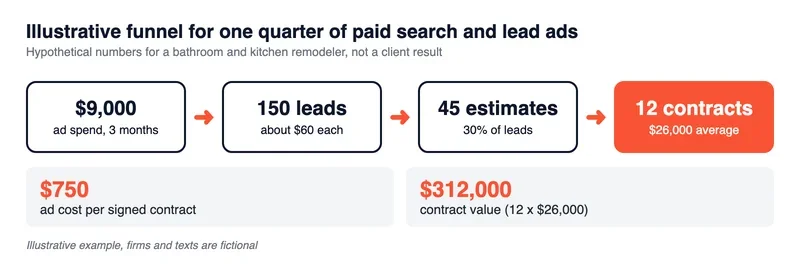
Here is how the numbers might look. The funnel below is a hypothetical example, not a client result. A remodeler spends $9,000 over three months on Local Services Ads and search ads in the Denver area, gets 150 leads at about $60 each, books 45 in-home estimates and signs 12 contracts at an average of $26,000 (close to the midrange bath figure above). That is $750 of ad spend per signed contract and $312,000 of contract value. The lesson is not the specific numbers but the chain: leads are the cheap part, and estimates and contracts decide whether the channel pays.
Real photos matter in ads as much as on the site. Photos of your own current jobs in the rough and finished stages usually build more trust than glossy renderings, and an invitation to see a finished project in the same neighborhood gives people a reason to call.
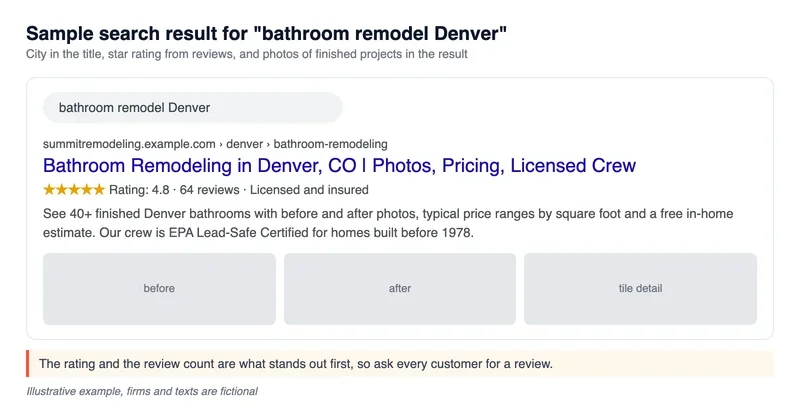
SEO complements paid ads in the long run. Pages for each service and city, for example "bathroom remodeling in Denver" or "kitchen remodeling in Plano", capture searches that are expensive to buy by the click. A rating and project photos help the listing stand out. Track where those pages rank in Google with our position tracker and write titles and descriptions with the meta tags tool.
Angi, Thumbtack, Houzz, Yelp and Nextdoor: how to avoid a race to the bottom
Lead marketplaces give you customers without a big website or a long setup: people are already there asking for a contractor. The trade-off is competition. On Angi and Thumbtack the customer often contacts several pros at once, so the cheapest or fastest reply wins many jobs. Treat these as one channel in the mix, not the whole business.
"You may pay for leads you don't win."
Housecall Pro, on the shared-lead model at Angi
Prices vary by trade and city, and neither platform publishes a rate card. Housecall Pro reports Angi lead costs of $15 to $85 per lead, a typical membership fee of about $300 a year and ad packages from $300 a month, and says that actual costs depend on trade, market and contract terms. For Thumbtack it cites $10 to over $100 per lead, with higher prices in busy markets such as Los Angeles or Chicago, and notes that you can set a weekly budget and adjust lead prices. Count how many leads it takes to sign one contract; otherwise the channel quietly becomes unprofitable.
Houzz works differently: it is a photo-led portfolio and design-inspiration site, so a complete profile with project galleries is worth having for visual work. Yelp Ads are pay-per-click, Yelp says you can start at an average of $5 a day with no term contract, and ads appear in sponsored results above and below organic ones. Nextdoor offers a free business page, free posts to neighborhood feeds and paid ads, and neighbors can leave recommendations, which fits remodeling where trust comes from the street. Its own materials say some business types need verification documents before posting to newsfeeds.
The ad or profile text influences calls as much as photos. Compare vague phrasing with specifics:
- "High-quality, affordable remodeling" versus "Bathroom remodel in Columbus in 3 weeks, written estimate before work starts";
- "Experienced craftsmen" versus "A crew of four, with photos of every finished project in our profile";
- "Personal approach" versus "Free in-home estimate, payment schedule set in the contract";
- "All types of finishing work" versus a list of services: tile, drywall, plumbing and electrical coordination, cabinets.
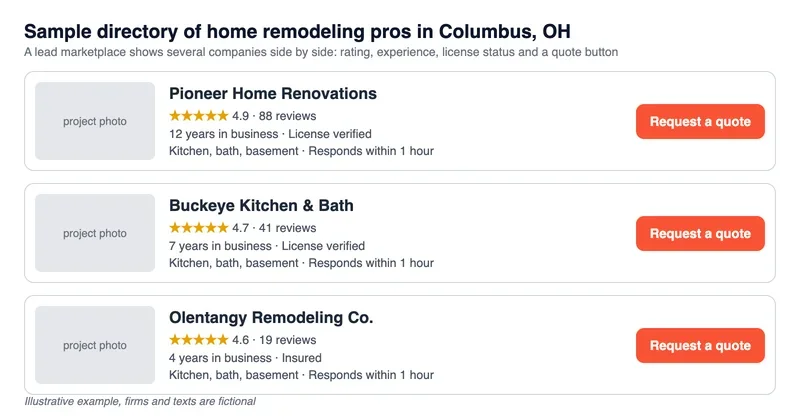
Fill out marketplace profiles even if you never buy leads, if only for the reviews. A business built entirely on bought leads is risky: the price per lead rises with competition, and the customer stays a customer of the platform. Mind the licensing side too. California's board notes that a referral service cannot solicit or negotiate contracts on a contractor's behalf, and that the homeowner should contract and pay the licensed contractor directly. Here is what a listing looks like in a sample directory: companies side by side with rating, years in business, license status and a quote button.
Google Business Profile, Maps and reviews: customers from the next street
When someone searches "kitchen remodeling near me", Google often shows a map and three or four businesses above the regular results. A complete, verified Google Business Profile is what gets you into that block: category, hours, phone number, website, service areas and photos of finished projects. It is easy to test: stand in front of a job site, open Google Maps on your phone and search for your service. The sample below shows what the customer sees before opening any listing: rating, number of reviews, category and hours.
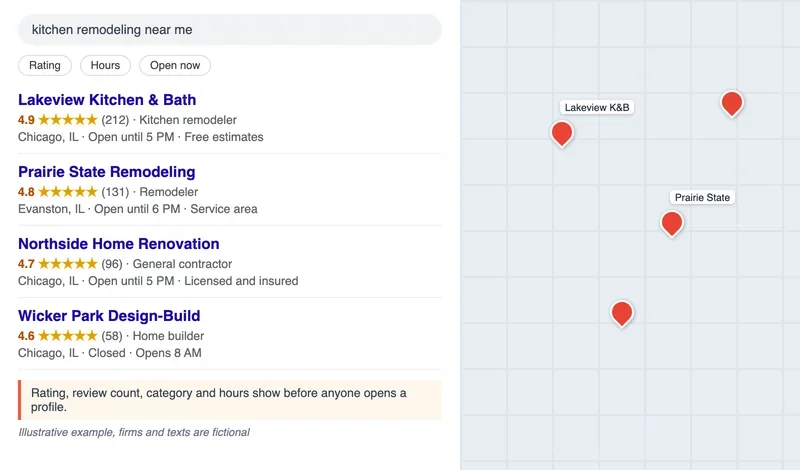
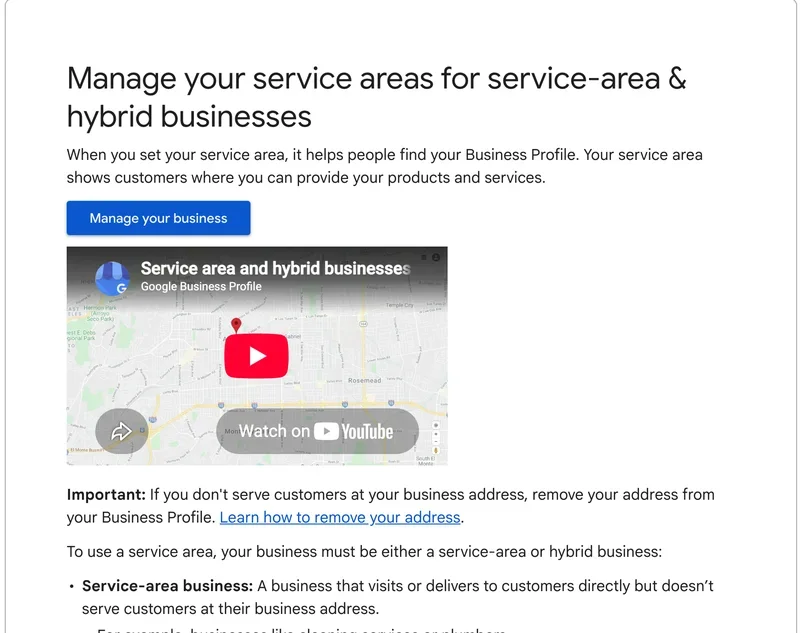
Most remodelers travel to the customer, so the service area setup matters. Google lets a service-area business list up to 20 service areas (cities, ZIP codes and similar), recommends that the whole area stay within about two hours of driving from where you are based, and says that if you do not serve customers at your address you should remove the address from the profile. Name your services exactly as people search for them, such as "bathroom remodeling" or "tile installation".
Reviews carry more weight in remodeling than in many service categories, because homeowners trust you with their house and tens of thousands of dollars. Ask for a review the day the project ends, while the customer is happy, and send a direct link. It helps when the client adds photos and mentions their neighborhood: such a review works as a portfolio for neighbors planning a similar job. Keep your methods clean. The FTC's rule on reviews prohibits fake reviews and paying for reviews conditioned on a particular sentiment, and bars using threats or false accusations to get a bad review removed. Never write reviews yourself or offer a discount for a five-star rating.
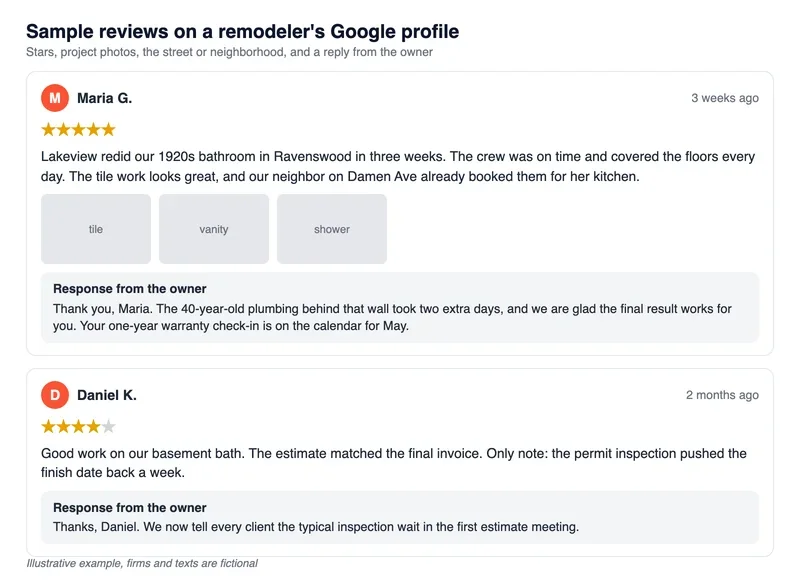
Reply to every review with substance: what you did, how long it took and what you fixed under warranty. You must be verified to reply, and Google says replies usually take up to 10 minutes to review, though sometimes up to 30 days. Answer critical reviews calmly and with facts, because your next customer reads your response. Once a month, open the profile performance report, which shows calls, directions, website clicks and the search terms people used. Read it by month to see your own seasonality: remodeling demand has peaks and slow stretches that differ by region, and your calendar of ads, outreach and crew capacity should follow your data, not a national average. More on listings in our local SEO guide.
Which photos and videos sell remodeling work?
People buy remodeling with their eyes, which is why before-and-after shots are the core of the content. The same logic runs through marketing for other results-based services: show the outcome, and be honest about what you show.
Photograph every project in the same format: a wide shot from one vantage point before and after, close-ups of details such as tile joints and trim, hidden-work stages (framing, waterproofing, wiring before drywall) and the crew at work. A phone with a good camera is enough; consistent lighting and angles matter more than the gear. Google asks for JPG or PNG photos between 10 KB and 5 MB, recommends 720 by 720 px, and wants photos in focus, well lit and without heavy filters; videos can be up to 30 seconds and 75 MB. One shoot can feed your website, your profile and social accounts.
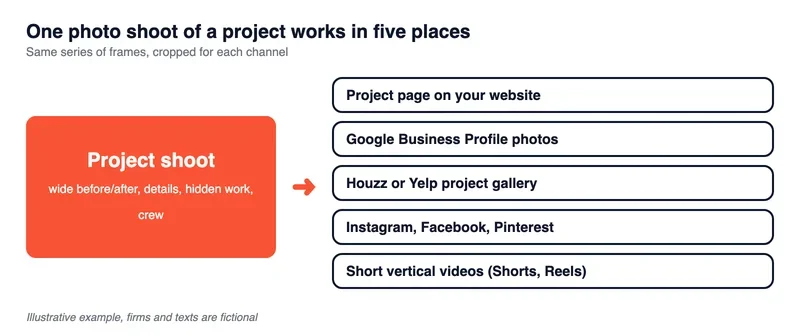
On Instagram, Facebook and Pinterest, remodeling works as both a showcase and an advertising channel. Post before-and-after carousels, tag the neighborhood, and use only real photos in paid posts. Short vertical videos (YouTube Shorts, Instagram Reels) suit a quick room reveal.
Videos also answer questions that would otherwise come up during the site visit:
- a walkthrough of a finished kitchen with the project manager: what was done and what it cost;
- a time-lapse of one project from demo to final clean;
- a breakdown of the estimate: what makes up the price per square foot;
- mistakes you have seen in earlier remodels and how your crew avoids them;
- answers to common questions: how long the job takes, whether the family can stay home during work, and how permits and inspections affect the schedule.
Local home bloggers, neighborhood accounts and a local newsletter can help with reach if their audience lives in your area. A tour of a finished project or a giveaway of a bathroom design consultation are good formats.
Referrals and partners: designers, showrooms, agents, inspectors
Referrals bring most of the work for many remodelers, and you can help them along. When finished projects are visible on the street, neighbors ask for your number. Make it easy: put a yard sign up during the job where local rules and the homeowner allow it, leave cards with the neighbors who are watching the dust settle, and offer a credit on the next room for a referral. Mind local sign rules and any HOA restrictions.
Remember permits when you sell the schedule. Rules are local: in Seattle, for example, minor repairs of $6,000 or less in any 6-month period may not need a permit, but any work on load-bearing supports or the building envelope does, however small. Tell customers in the estimate who pulls the permit and how inspections can move the dates; it prevents the complaint in the sample review above and builds trust.
Look for partners among the people who meet your customer before you do. The diagram shows who they are.
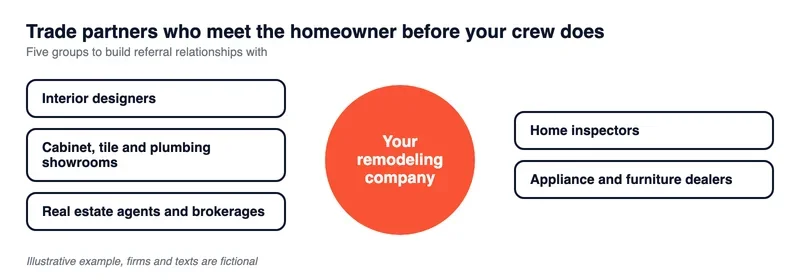
- Interior designers and architects: a client with a finished design needs a crew to build it;
- cabinet, tile and plumbing showrooms: cards at the counter, joint events, a project manager on the sales floor;
- real estate agents and brokerages: buyers of older houses often plan a remodel right after closing;
- home inspectors: they see defects first and know which jobs the buyer will need;
- appliance and furniture dealers: their customers need a finished space and you need customers.
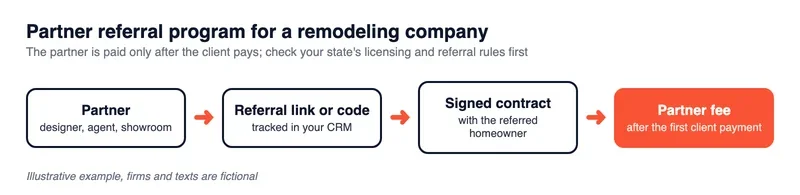
The partnership works both ways: you send buyers of materials and furniture to the partner, and they send remodeling clients to you. For regular partners, set up a simple program with a fixed percentage or amount per contract, clear tracking and payment after the client's first payment. Check your state's contractor licensing and consumer-protection rules before paying anyone for referrals, and have an attorney review the agreement. Compare the fee with your cost per signed contract from ads: a referred customer arrives with trust already built, so a fee of the same size usually pays back faster than a click.
An inquiry has arrived: from the first call to the visit and the contract
Ad budgets are often wasted right after the lead comes in. A homeowner who contacted three companies usually picks the one that answered first and offered a visit time. Call or text within minutes, confirm the address and the scope, and book a free in-home estimate. In Local Services Ads you can answer from the lead inbox; on Angi and Thumbtack the same speed decides who gets the job.
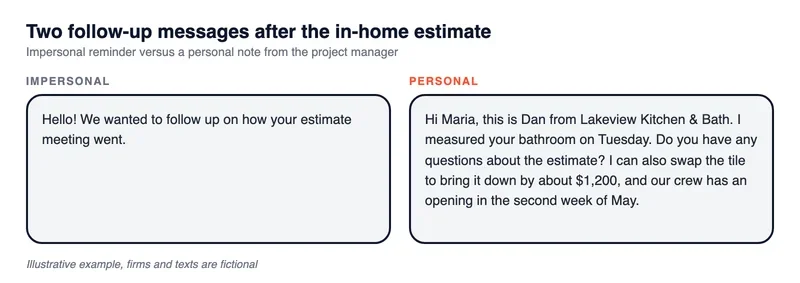
After the visit, send a written estimate broken down by phase, with photos of a similar finished project. If the customer goes quiet, follow up in a few days with specifics: what can be simplified in the scope and when the crew has an opening. The difference is easy to see in the two messages below: an impersonal "we wanted to follow up", and a note from the project manager who uses the customer's name and asks about the estimate.
When you sign the contract at the customer's kitchen table, mind the FTC's Cooling-Off Rule: for sales over $25 made at a person's home or any place other than the seller's business, sellers must tell buyers about their right to cancel within three business days. State home-improvement laws add their own contract content rules, so have your contract template reviewed by a local attorney.
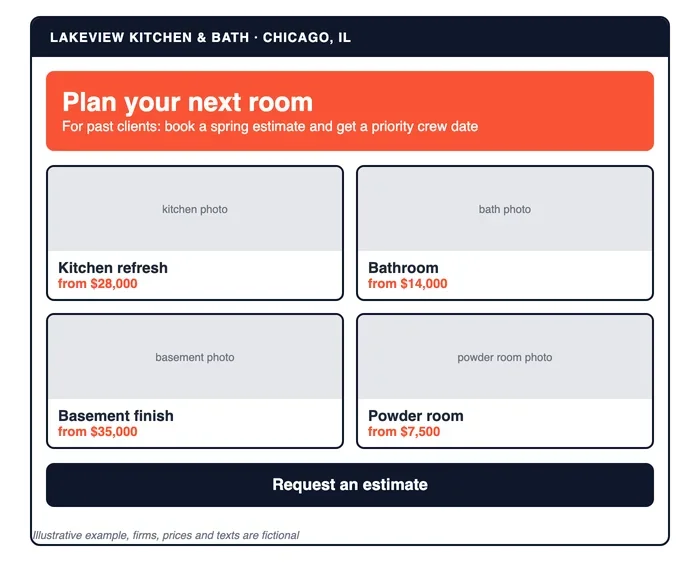
Finished jobs generate new work too. Once a quarter, write to past clients and offer an estimate for the next room, a deck or a warranty check. A client who remodels in phases is more likely to return to the crew that finished the first phase on time. A simple email works: one headline, four project types with "from" prices and one request button.
Which metrics show you are not paying for empty leads?
Cost per click and even cost per lead say little about results. Track the whole path: lead, in-home estimate, written proposal, signed contract and revenue. For that, every lead needs a source: connect a CRM, call tracking and Google Analytics key events for form submissions, calls and booked visits, and use the lead inbox in Local Services Ads and the profile performance report for the rest.
Go back to the hypothetical funnel above: 150 leads, 12 contracts, $26,000 on average. A lead price of $60 says nothing about profit on its own, while $750 of ad spend per $26,000 contract does, once you subtract your margin. The same funnel is shown below.
Put your channels into one table and review it monthly:
| Channel | Who it brings | When to expect leads | What to track |
|---|---|---|---|
| Local Services Ads and Google Ads | Homeowners searching now in your service area | From the first days after verification and launch | Cost per lead, cost per signed contract, share of out-of-area or off-scope leads |
| Angi, Thumbtack | Small and mid-size jobs, price shoppers | From the first week | Leads needed per contract, lead fee per signed job |
| Google Business Profile and Maps | Homeowners on the next streets | A few weeks after verification and a full profile | Calls and direction requests, rating, review count |
| SEO by service and city | People comparing prices and contractors | A few months | Rankings by city, leads from organic search |
| Houzz, Instagram, Facebook, video | People who choose by photos and style | After one or two months of regular posting | Messages and estimate requests from social profiles |
| Referrals and partners | Premium jobs, repeat clients, neighbors | Grows with the number of finished projects | Share of contracts from referrals, fees paid to partners |
Keep a channel if it brings contracts at a price that fits your margin, even when there are few leads. Cut back the stream of cheap leads that never reach an in-home visit in favor of referrals, your portfolio and partners.
Frequently asked questions
Where can a remodeler get jobs without a large budget?
Start with the free channels: a verified Google Business Profile with project photos, a Nextdoor business page, a Houzz or Yelp profile, social accounts and referrals from past clients. Agree on a commission-based partnership with two or three designers or a showroom after checking your state's rules. Start paid ads when your portfolio, license information, estimate form and in-home visit offer are ready.
What kind of remodeling photos work in ads?
Real photos of your own projects: wide before-and-after shots from one vantage point, close-ups of details such as tile joints, intermediate stages that show hidden work, and the crew at work. Stock photos and renderings undermine trust, and Google asks for photos that are in focus, well lit and not heavily filtered.
Is it worth buying leads from Angi or Thumbtack?
You can test them with a small weekly budget if you count what each signed contract costs. Housecall Pro describes Angi as a shared-lead model where you can pay for leads you do not win, and reports per-lead prices that vary widely by trade and city. Compare the cost per signed contract with Google Local Services Ads and your own site before you scale.
Do I have to show my license number in ads?
It depends on your state. California requires it in all forms of contractor advertising, including online posts, and publishes a civil penalty of $100 to $1,000 for a first offense. Other states set their own rules, sometimes at the city or county level. Check your state licensing board, and if you work on pre-1978 homes, confirm your EPA lead-safe certification as well.
Does a remodeling company need a marketer?
A small company usually needs a contractor to set up Google Business Profile, Local Services Ads and Google Ads, and one person on staff to photograph projects, update listings and reply to reviews. A full-time marketer makes sense when you work in several metro areas, run several channels at once and the owner no longer has time to read the reports.
Дата публикации:
Задать вопрос
Вопросы и ответы
Пока нет опубликованных вопросов. Задайте первый — после модерации он появится здесь.
Вам также может понравиться
Все статьи
Local business
Local SEO: How to Get Your Local Business Into Google Maps and the Local Pack
US local SEO: Google Business Profile, local pack, Apple Maps, Bing, Yelp, NAP and citations, location pages, reviews rules and a three-month plan.

Aesthetic medicine
Plastic surgery marketing: how to promote a practice within FTC, HIPAA and state board rules
Plastic surgery marketing in the US: FTC rules, HIPAA photo authorization, board certification claims, Google and Meta ad policies, reviews and financing.